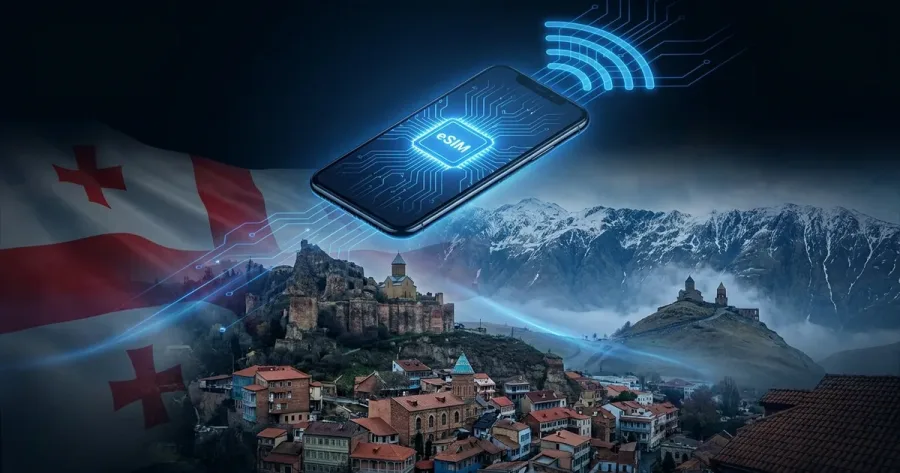
Part of our destination eSIM planning hub. New to travel eSIMs? Start with the complete setup guide for Pakistani travellers.
Five years ago, if you told someone in Lahore you were going to Georgia, they'd have assumed you meant the one near Atlanta. Now it's one of the first places that comes up when a group of friends starts planning a trip that isn't Dubai, Thailand, or the usual suspects. Part of it is the visa situation being genuinely easy compared to most of Europe. Part of it is just Instagram. Somebody's Kazbegi shot goes around, and suddenly a dozen more people book flights through Istanbul.
Why Georgia, and Why Now
The honest answer is a mix of things that all lined up at once. Entry for Pakistani travellers has become much more manageable; most people now go through a straightforward online process rather than dealing with an embassy in person, though it's worth double-checking current requirements before you book since these things do get revised. On top of that, the Lari still goes a long way compared to euro-zone prices, flights routing through Baku or Istanbul aren't painful, and the country itself is small enough that you can genuinely see Tbilisi, the wine region, and a mountain town in under two weeks without living out of a suitcase the whole time.
None of that has much to do with phone signal, admittedly. But it's the reason so many people are now asking the same question: does my phone actually work when I get there, and do I need to sort something out before I land, or can it wait.
What Does eSIM Coverage Actually Look Like in Georgia?
Georgia has three main carriers: Magticom, Geocell and Beeline. Between them, Tbilisi and Batumi are covered about as well as you'd expect from any mid-sized European city. 4G is the default, and it holds up fine even in the tangle of narrow streets around the sulphur baths and Narikala Fortress, where you'd think old stone walls might cause problems. They don't, really.
Kazbegi (also called Stepantsminda) is where things start to vary. The town itself is fine. The road up to it, through the Gudauri pass, has a couple of short stretches where signal drops out entirely. Nothing dangerous, just annoying if you're trying to stream music on the drive. Svaneti is the real exception. Mestia has workable signal most of the time. Ushguli, which sits at over 2,000 metres and is one of the highest continuously inhabited settlements in Europe, is genuinely patchy. It comes and goes depending on weather and which side of the valley you're standing on. If you're headed up there, download your maps in advance and don't count on being reachable for a few hours.
How Much Data You're Actually Going to Use
This depends more on your itinerary shape than most guides let on. A city-only trip barely touches your data allowance. Add a couple of day trips and it climbs. Add Svaneti, where you'll be relying on offline maps anyway, and your live data use during that stretch actually drops because there's nothing to connect to.
| Trip Shape | Recommended Data | Notes |
|---|---|---|
| Tbilisi only, 3-4 days | 2-4GB | Maps, messaging, normal social media use |
| Tbilisi + Kazbegi or Kakheti, 5-8 days | 5-8GB | More navigation, photo uploads from the road |
| Full loop incl. Svaneti + Batumi, 9-14 days | 10-15GB | Heavier map use, some dead zones where nothing gets used at all |
Compare exact plan sizes on simless.pk's Georgia eSIM plans page and pick whichever's closest to your actual route rather than your total trip length. A week that's mostly Tbilisi needs a lot less data than a week that's mostly driving.
How Do You Get It Working Before You Land in Georgia?
Choose a plan on simless.pk and confirm the current offer, payment instructions and delivery timing with the WhatsApp team. Install it on stable Wi-Fi according to the plan instructions; our iPhone and Android guides explain the device menus. Keep your Pakistani SIM in the other slot if needed, but check its roaming settings to avoid unintended charges.
The Marshrutka Thing Nobody Mentions
If you're getting between cities on a budget, you'll end up on a marshrutka at some point — the shared minibuses that run between Tbilisi, Kazbegi, Mestia and pretty much everywhere else. Drivers don't announce stops. There's no display board. The only way most people figure out where they are is by watching a live map on their phone, which means this is one destination where having working data isn't just convenient, it's the difference between getting off where you meant to and ending up somewhere you didn't.
A Few Things Worth Knowing
Old Tbilisi and the cable car up to Narikala both have solid coverage, so it's a good stretch for anyone trying to get a decent photo out without their maps app lagging. If your route includes Svaneti, plan for a few hours of being genuinely offline rather than treating it as a minor inconvenience — the scenery makes up for it. And keep some Lari in cash; card acceptance drops off fast outside Tbilisi and Batumi, which has nothing to do with your eSIM but will matter more on the day.
Frequently Asked Questions
Do Pakistani citizens need a visa for Georgia?
Georgia's entry requirements for Pakistani passport holders have gotten noticeably easier over the last couple of years, with many travellers now going through an e-visa process rather than a full embassy visit. Requirements do shift, so check Georgia's official immigration portal a few weeks before you book rather than relying on what a friend did last year.
Is there phone signal in Svaneti and up near Kazbegi?
Tbilisi and Batumi have strong, reliable 4G. Kazbegi town is decent, though the mountain road up through Gudauri has a few short dead spots. Svaneti, especially Ushguli, is the one place where you should genuinely expect to lose signal for stretches at a time — download offline maps before you go up there.
How many days of data do I actually need for Georgia?
For a week split between Tbilisi and one or two side trips, 5-8GB covers maps, messaging and a reasonable amount of photo uploading. If you're doing a longer loop through Kazbegi, Kakheti and Batumi, 10-15GB is a safer bet, mostly because you'll be relying on maps more in unfamiliar mountain roads.
Can I use the eSIM on marshrutka rides between cities?
Yes, and it's genuinely useful there — marshrutka drivers rarely announce stops, so having live maps running to track where you are is one of the more practical uses of a data connection in Georgia, rather than just a nice-to-have.
Keep Georgia travel practical
For a Tbilisi stay, data is mostly about maps, messaging and booking confirmations. If you are continuing to Kazbegi, Batumi or smaller towns, download offline directions before leaving a reliable connection and let someone travelling with you keep a second copy of the itinerary.
The plan you buy may use a different local network from another traveller’s plan, so avoid blanket coverage promises. Georgia’s communications regulator, ComCom, is the appropriate public source for the local telecom market; confirm the network and allowance shown for your chosen offer.
Source used for this section: Georgia communications regulator. Reviewed 12 August 2026. Information can change, so confirm the current plan card and ordering details with the WhatsApp team before paying.
Before purchasing: a quick accuracy check
This article is practical guidance, not a promise of network speed, availability or a particular operator. Plan prices, allowance, activation timing, partner networks and fair-use conditions can change. Check the selected offer with the WhatsApp team before paying, and keep the order conversation and installation instructions until the eSIM is working.
Install while connected to Wi-Fi. Your device needs eSIM support, an unlocked carrier status and room for another profile. On arrival, select the travel eSIM for mobile data and follow the activation instructions provided with that plan.
Our verification method explains how Simless reviews catalogue information and updates editorial pages. Use the device compatibility checker before buying.